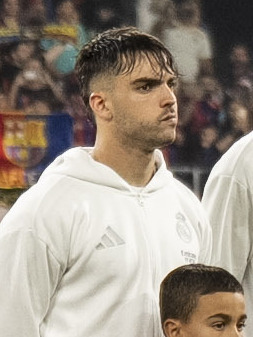
The exhilarating rush of Champions League football often brings moments of breathtaking skill and dramatic victories. However, it can also cast a shadow when player welfare is at stake. Such was the case during a recent crucial fixture, where Real Madrid secured their passage to the Champions League Round of 16, but the triumph was accompanied by grave concern for young defender Raúl Asencio, who was stretchered off the pitch with a worrying neck injury.
The incident involving the promising 23-year-old Spanish centre-back immediately shifted the focus from Real Madrid's on-field success to the Raul Asencio Suffers Worrying Neck Injury in Champions League. His painful exit underscored the inherent risks in elite-level football, leaving fans, teammates, and staff anxiously awaiting updates on his condition. This article delves into the specifics of Asencio's verletzungen, the implications for his career, and the broader context of player safety in the beautiful game.
The Alarming Incident: A Collision of Fortunes
The pivotal Champions League playoff match was nearing its conclusion when the concerning incident unfolded. Around the 77th minute, a moment that should have been routine turned perilous. Asencio, in a display of his defensive commitment, rose high to contest an aerial ball. However, a heavy collision with a teammate saw him land awkwardly and remain on the turf, visibly distressed and in considerable pain. The silence that fell over the stadium, momentarily overriding the cheers for Real Madrid's impending victory, was palpable.
The immediate response from the medical team was swift and professional. Recognizing the potential severity of a neck injury, they administered treatment on the pitch for several minutes, exercising extreme caution. The sight of Asencio being carefully placed in a neck brace and then stretchered off the field was a sobering reminder of the physical demands placed on modern athletes. He was promptly taken to a local hospital for precautionary checks, a standard protocol for such delicate injuries.
While initial updates brought a degree of relief, suggesting the situation was not life-threatening, the nature of the injury still warranted significant concern. Neck injuries, given their proximity to the spinal cord, are never taken lightly in professional sports. The incident highlighted a stark contrast: Real Madrid’s secure 2-1 victory (3-1 on aggregate) propelled them confidently into the Round of 16, yet the celebratory mood was undoubtedly tempered by the uncertainty surrounding one of their burgeoning talents. The Champions League Win: Asencio's Injury Raises Concern for Real Madrid, painting a dual picture of triumph and tribulation.
Understanding Neck Injuries in Elite Sports
Neck injuries in football, while less common than limb injuries, carry a far greater potential for severe, long-term consequences. The cervical spine, or neck, houses crucial nerves and the spinal cord, which is vital for bodily function. Any damage here can range from mild muscle strains to more serious issues like ligament tears, disc herniations, or, in the most extreme cases, vertebral fractures or spinal cord trauma.
The mechanism of Asencio's injury – an awkward landing after an aerial collision – suggests potential whiplash, hyperflexion, or hyperextension, possibly combined with an axial load. In such high-impact scenarios, the head and neck can be subjected to sudden, violent movements that exceed their normal physiological range, leading to soft tissue damage or structural compromise.
Medical Protocols and Diagnostics:
- Immediate Immobilization: As seen with Asencio, the first priority is to stabilize the head and neck to prevent further injury. A neck brace is crucial for this.
- On-Field Assessment: Trained medical staff evaluate for neurological deficits, pain levels, and range of motion, though full assessment often requires removal from the immediate danger of the pitch.
- Hospital Checks: At the hospital, a battery of diagnostic tests is typically performed:
- X-rays: To check for bone fractures or dislocations.
- CT Scans: Provide more detailed images of bone structures, identifying subtle fractures or alignment issues.
- MRI Scans: Essential for evaluating soft tissues, including ligaments, muscles, discs, and crucially, the spinal cord itself, to detect bruising, swelling, or compression.
The "not life-threatening" initial assessment is a significant relief, suggesting no immediate critical spinal cord damage or severe fractures. However, even seemingly minor neck injuries can lead to prolonged recovery periods and require meticulous rehabilitation to ensure a safe return to high-intensity sport.
The Ripple Effect: Asencio's Absence and Real Madrid's Defensive Depth
For Raúl Asencio himself, this injury represents a significant personal setback. As a young centre-back on the cusp of cementing his place in one of the world's most demanding clubs, consistent game time and an injury-free run are paramount for development. A neck injury, even if not career-ending, demands patience and a cautious, methodical recovery process, potentially sidelining him for an extended period. The mental toll of such an injury, particularly for an athlete driven by ambition, should not be underestimated. Support from club psychologists and a robust rehabilitation program will be vital for his physical and psychological recovery.
From Real Madrid's perspective, Asencio's absence, regardless of its duration, creates an immediate challenge to their defensive depth. Carlo Ancelotti's squad, while boasting world-class talent, operates within a packed schedule across domestic and European competitions. The loss of a promising young player who offers a reliable backup or even a starting option puts additional strain on the available defenders. This becomes particularly acute during the demanding knockout stages of the Champions League and the intense grind of the domestic league title race.
Real Madrid's resilience and squad depth are legendary, but every injury tests these attributes. Ancelotti will need to carefully manage his remaining centre-backs, considering potential fatigue, tactical flexibility, and the risk of further injuries. While the team secured its immediate objective, the long-term implications of Asencio's verletzungen will require careful navigation from the coaching staff and medical department. This incident serves as a stark reminder that even in victory, the human element, and the well-being of the players, remain paramount.
Beyond the Pitch: Player Safety and Modern Medical Protocols
Asencio's injury reignites the ongoing discussion surrounding player safety in professional football. While contact sports inherently carry risks, governing bodies like FIFA and UEFA, along with individual clubs, continuously strive to minimize severe injuries. This includes stricter rules regarding dangerous play, better pitch conditions, and increasingly sophisticated medical protocols.
Key Aspects of Modern Player Safety:
- Advanced Medical Teams: Top clubs invest heavily in state-of-the-art medical facilities and multi-disciplinary teams, including doctors, physiotherapists, sports scientists, and psychologists, to ensure immediate and long-term care.
- Concussion Protocols: While Asencio's was a neck injury, the heightened awareness around head injuries and concussion protocols in football signifies a broader commitment to player safety. Similar diligence is applied to all potential spinal injuries.
- Injury Prevention Programs: Clubs implement rigorous strength and conditioning programs, alongside detailed biomechanical analysis, to identify and mitigate injury risks before they occur.
- Player Education: Athletes are increasingly educated on the importance of reporting even minor ailments and adhering strictly to rehabilitation programs.
Reintegration and Rehabilitation: A Long Road Ahead
Returning to play after a significant neck injury is a multi-phased process that demands extreme caution and patience. It typically involves:
- Initial Rest and Healing: Allowing the injured tissues to begin their repair process, often with limited movement.
- Gradual Mobilization: Gentle exercises to restore range of motion, overseen by physiotherapists.
- Strength and Conditioning: Progressively strengthening the surrounding muscles to support the neck and prevent recurrence. This includes core stability work.
- Sport-Specific Drills: Reintroducing football movements, initially non-contact, then gradually progressing to controlled contact situations.
- Medical Clearance: A final, comprehensive medical assessment from specialists to ensure full recovery and fitness before returning to competitive action. This often includes imaging to confirm healing.
The psychological aspect cannot be overstated. Overcoming the fear of re-injury, especially after a frightening incident like Asencio's, requires mental fortitude and expert support. The timeframe for recovery is highly individual and depends entirely on the specific nature and severity of Asencio's verletzungen. Real Madrid will undoubtedly prioritize his long-term health over a rushed return.
The incident involving Raúl Asencio serves as a powerful reminder of the physical sacrifices made by athletes at the pinnacle of their sport. While Real Madrid justly celebrated their progression in the Champions League, the injury to their young defender casts a shadow of concern. We join fans globally in wishing Asencio a swift, full, and safe recovery, hopeful that he will soon be back on the pitch, continuing to fulfill his immense potential for the Whites. His journey back will be a testament to his resilience and the dedicated support of Real Madrid’s medical and coaching staff.